Building infrastructure to optimize production and export capacity
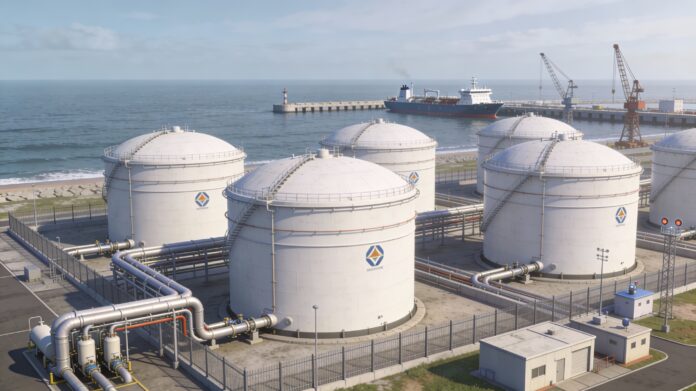
The Government of Guyana is building the infrastructure to monetize natural gas liquids (NGLs) as a new revenue stream, which complements the well-advanced Gas-to-Energy project. The plan envisages NGL exports flowing through the Demerara River channel, positioning the country to generate steady revenues while transforming its domestic energy sector. Central to this strategy is the construction of a natural gas liquids storage and marine offloading facility.
The Office of the Prime Minister launched a two-part procurement process to advance the project. In the first stage, the government has invited firms to pre-qualify for the construction of the facility and its associated pipeline. Applicants must demonstrate prior experience in building at least five NGL storage and offloading facilities of a similar or greater scale, with submissions due in October. Meanwhile, the government is procuring engineering services to develop a comprehensive request-for-proposals package that will underpin the construction tender.
The planned facility will handle about 4,200 barrels of NGLs per day. Importantly, it must also be scalable to receive an additional 5,900 barrels daily to accommodate a potential second phase of the project. The liquids will be separated from the gas stream at a processing plant under construction in Wales, West Bank Demerara, before being exported via the Demerara River.
This storage and export capacity will integrate seamlessly with the broader Gas-to-Energy project, which includes a 300-megawatt power plant at Wales and a natural gas liquids separation facility.
As of mid-September, the government has indicated that the power plant is more than threequarters complete. The overall project, including the separation plant and associated infrastructure, is roughly 68% complete. Officials are working with the project contractor to ensure that Phase 1 is delivered by 2026. At the heart of the project is a shift in Guyana’s energy model. The 300 MW plant will use dry gas from ExxonMobil’s Liza field in the Stabroek Block, supplied via a pipeline. This facility will allow Guyana to reduce its dependence on imported heavy fuel oil, cutting costs and lowering emissions tied to power generation.
The monetization of natural gas liquids will provide the government with an additional revenue stream, creating fiscal space and enhancing the overall profitability of the project. The financial framework is also significant. ExxonMobil and its partner Hess invested about USD1 billion to build the pipeline that will deliver the gas to shore.
The government has pledged to repay this amount over 20 years, with an annual payment of approximately USD55 million. NGL sales are crucial to covering these repayment obligations while still generating profit for the state.
Looking ahead, Guyana is preparing for the potential expansion of the project. The government expects initial gas production to reach 50 million cubic feet per day. A second phase under consideration can boost throughput by another 75 million cubic feet per day and facilitate the construction of a second power plant. The scalability of the new NGL storage and offloading facility ensures that Guyana will be able to capture more value as production grows.
With Phase 1 on track for completion in 2026, Guyana is laying the foundation for a dual benefit: a reliable, cleaner, and more affordable power supply at home, and a profitable new revenue stream from the export of natural gas liquids.