― Dr. Martin Pertab reflects on progress and the road ahead
By Clestine Juan
Guyana’s Local Content Secretariat (LCS) has spent the past few years proving that smart regulation, relentless engagement, and disciplined data tracking can convert the country’s oil boom into a broad-based opportunity. Dr. Martin Pertab—the former Director of the LCS, the agency charged with implementing and enforcing Guyana’s Local Content Act—is candid about both the scoreboard to date and the priorities that must endure.
“We are informed by the numbers and guided by constant engagement. Everything we do is to ensure Guyanese benefit, and to do so in a sustainable, competitive way,” he said during an exclusive interview with Energy Magazine.
The Numbers Tell the Story
Dr. Pertab noted that, as of June 2025, local companies secured procurement contracts in 40 carved-out sectors, valued at approximately USD352 million, which is 11.5% higher than the same point in 2024. Operators projected local spending of USD526 million for the year.
By mid-year, the system had already delivered 65% of that projection, and by Pertab’s reckoning, “around 67% of the projected procurement opportunities” had reached Guyanese suppliers. Spending on training is also on an upward trajectory.
Spending on training is also on an upward trajectory. “Almost USD240,000 was spent on scholarships, another USD1.1 million on training in areas such as aviation engineering, digital, and leadership, totaling somewhere around USD45 million within the first six months of 2025,” Dr. Pertab said.
The LCS will continue to press for targeted skills, including a refreshed apprenticeship drive that aims to place about 100 technical students nationwide.
Execution by Engagement
Dr. Pertab applied a precise operating model. Keep the private sector close and the prime contractors and subcontractors even closer.
“We took a two-pronged approach: constantly engage the private sector so we know what is happening on the ground, and keep the contractors and subcontractors at the table so changes get buy-in. With that model we fixed issues like bundling of contracts and late payments that would not have been solved otherwise,” he explained.
The offshore catering industry evolved from a gap to a nationally organized framework.
“Almost 17 local catering companies are now delivering offshore,” Pertab said, and a second consortium of about 18 firms could soon come onboard with an international partner.
Local players have also made strides in providing brokerage and customs clearance services. And beyond the original 40 areas, the LCS mapped 25 additional sectors where locals are already competing, with about GYD45 million spent in the first half of 2025 alone.
Guyanese firms now dominate some areas that are not on the carved-out list. Pertab provided examples showing that cargo carrying services are nearly local.
Behind the outcomes is an innovative LCS app that gives companies real time information on compliance and other matters. The app is doing the heavy lifting for discovery-matching and alerts.
Aligning Laws to Market Realities
The LCS is preparing a measured refinement of the Local Content Act. According to Pertab, the goal is not to move goalposts but to modernize definitions and ownership-management thresholds where services are highly technical.
“As it stands, 51% ownership and 75% directors being Guyanese is achievable in non-technical services…in complex areas like hazardous waste management, it can become a barrier if local managerial capacity is still being built. We are exploring models that keep the objective intact, allow investment, and protect the sustainability of partnerships,” he explained.
Predictability is a core principle, and the refinement process will prioritize participation from women-owned businesses, small and medium-sized enterprises, and youth. “When we amend the law, we want to capture the real challenges, so we do not have to keep going back. Stability builds confidence,” Dr. Pertab added.
Geographic inclusion matters too, he said, adding that the Secretariat is engaging technical institutes outside Georgetown and intends to source more talent directly from hinterland communities for industry training pipelines.
He sees Local Content as a runway, not a barrier.
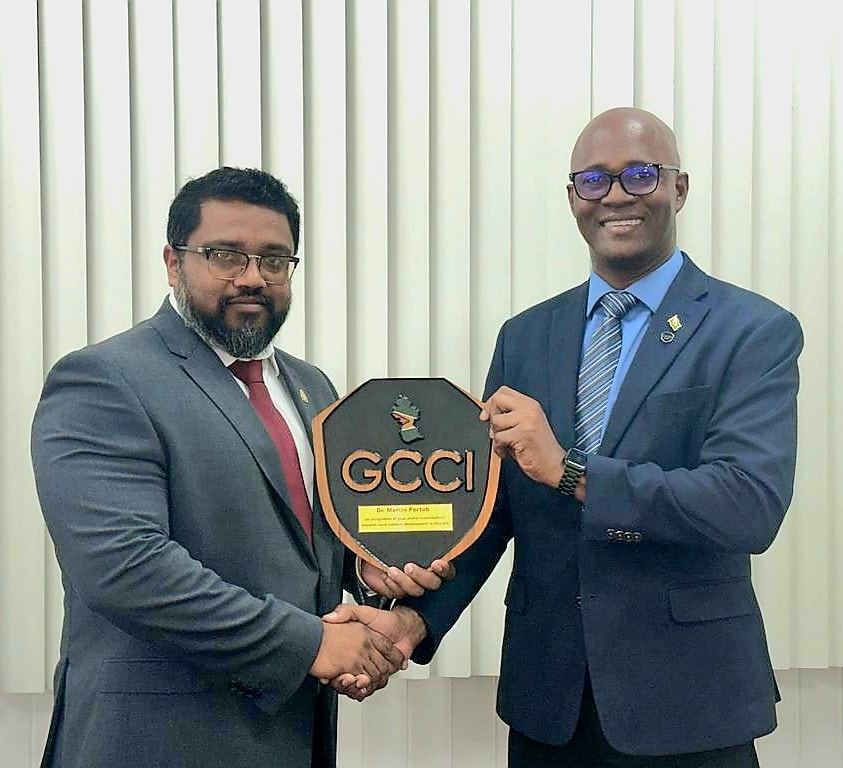
“We did not want to be seen as an agency that protects locals behind a wall. If you benefit, you must do so sustainably. Local firms have to stay competitive, on price and on capability, so they can win at home and against foreign players,” he said.
The market now reflects that mindset. Firms that began providing basic Personal Protective Equipment (PPE) supplies are now expanding into lab consumables and forming partnerships for subsea services and multi-purpose vessels. Real estate, medical, and catering services have grown from single-asset or single-contract outfits into scaled operations.
“We have seen firms go from one car to a fleet, from a handful of staff to 50,” Dr. Pertab said, while cautioning against price gouging and complacency. Many countries, particularly in the Caribbean and South America, aspire to emulate Guyana’s local content strategy. Dr. Pertab recommends that they adjust the law to suit their local circumstances.
He stressed that local content policies must be tailored to each country’s unique economic, cultural, and business environment to avoid counterproductive outcomes. Countries such as Suriname have engaged with Guyana to learn how to develop their own context-specific laws inspired by Guyana’s success rather than replicating them wholesale.
Advice to His Successor
When asked what advice he would give to the next LCS Director, Michael Munroe, Dr. Pertab answered immediately: “He has to keep the private sector close, and the contractors and subcontractors even closer. Keep talking. Keep monitoring. Keep solving. Once you have their support, local content naturally flows.”
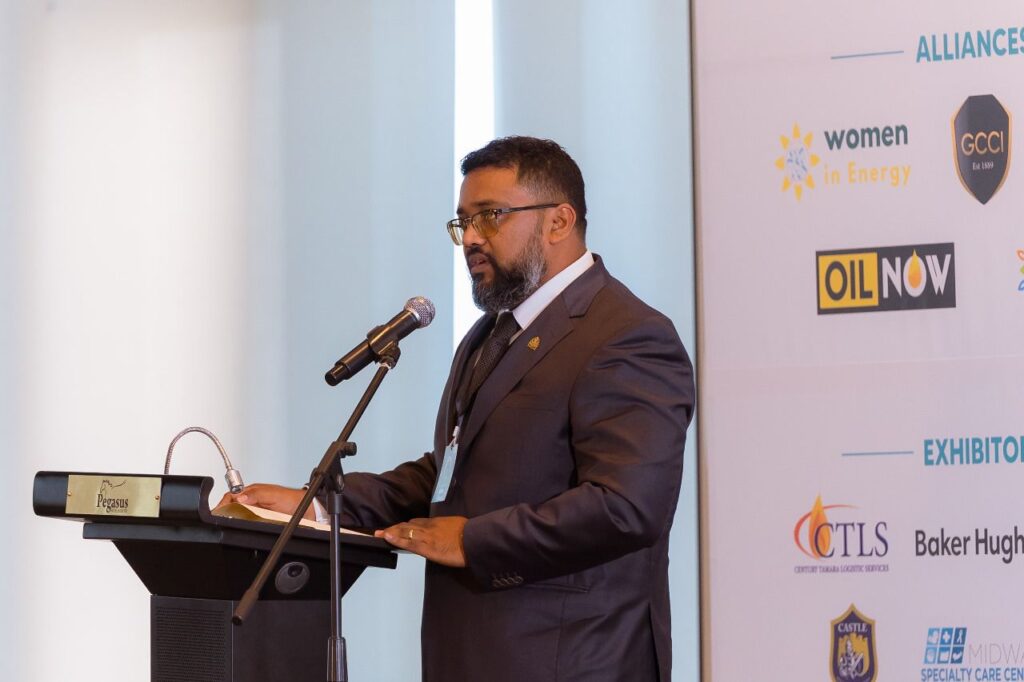
From 2022 to 2025, Dr. Pertab served as Director of the Local Content Secretariat within the Ministry of Natural Resources, where he played a key role in shaping and implementing Guyana’s Local Content framework for the oil and gas sector.
Dr. Pertab’s perspective as a professional economist is shaped by considerable research on resource economies. “My PhD work looked at Dutch disease and structural transformation. Local content is a critical lever for broad-based growth.
“Training requirements also help counter the resource transfer effect, where labour leaves traditional sectors for oil and gas. Upskilling Guyanese allows firms to fill senior roles from within, which reduces that pull and protects wider production,” he said
Under his leadership, the LCS focused on sectors that support oil and gas operations, like accommodation, transport, and catering. As capacity develops, the Secretariat will then prioritize specialized services.
To Dr. Pertab, the LCS legacy is already etched. It is no longer an experiment; it is a functioning model of how a small state can convert oil wealth into local opportunities.